
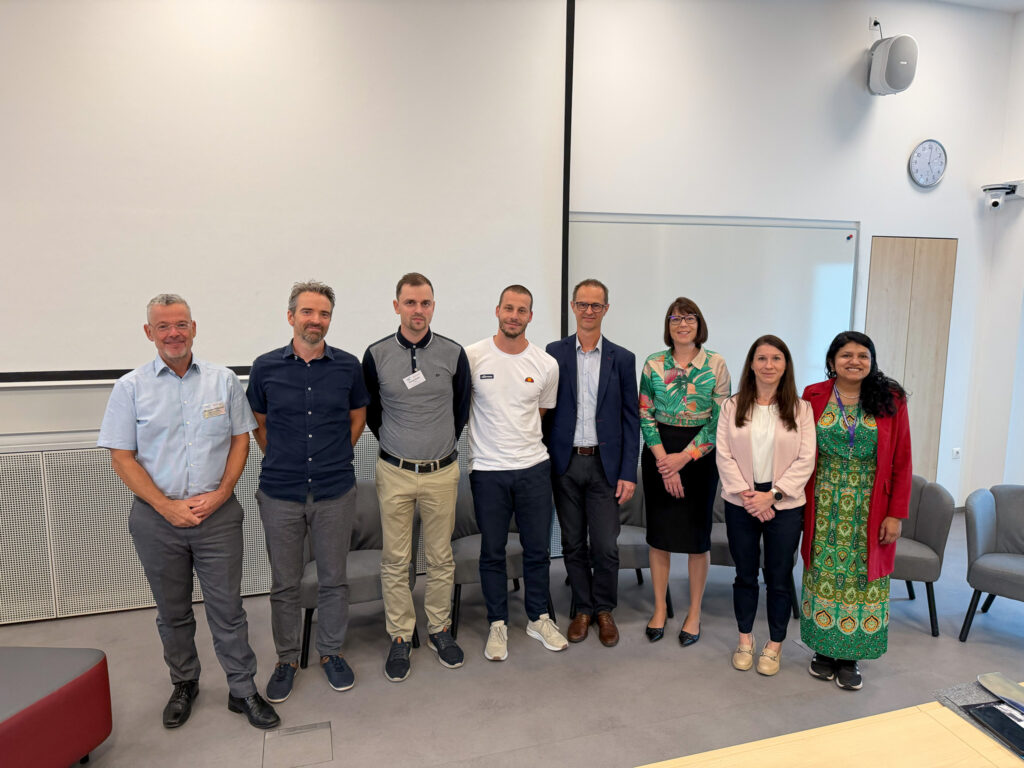
On 17 September, during the REMHub consortium meeting in Ljubljana, a roundtable brought together industry representatives from Slovenia. The discussion was facilitated by Prof. Damijan Miljavec. Around the table were companies that produce electrical machines, companies that work with magnets and companies that collect and recycle waste, so the conversation could follow the whole loop: collecting waste that contains critical raw materials, recycling it, producing new magnets and using them in new machines.
The first topic was supply security. What happens if magnets cannot be obtained, and how vulnerable are the production lines of permanent magnet machines, given that there are generally no alternatives? Some companies are building magnet stockpiles, but these would last a year at most. Substituting rare earth elements, especially heavy rare earths, remains difficult because magnet quality must not suffer, although companies are investing heavily in research in this area.
Participants also discussed whether the Slovenian hub should start with end-of-life components or industrial waste. The preferred starting point was industrial scrap, because it is controlled, already sorted and comes with known properties from the producer.
On collection, the group looked at whether Slovenia is meeting its WEEE targets, what the main problems are and where the material ends up. Most of it is destroyed or leaves Europe, and only a small share stays.
Finally, the roundtable covered quality certification for recycled magnets. Changing a magnet’s composition affects machine properties, which makes adapting existing production lines and products already on the market hard, but feasible for new lines and new products.
Prof. Damijan Miljavec also presented the discussion on Bloomberg Adria TV.
We use cookies to see how the site is used and to show embedded YouTube videos. You can accept all, reject everything except the necessary ones, or choose by category. More in our cookie policy