University of Ljubljana: Isolating critical rare earth metals through green chemistry
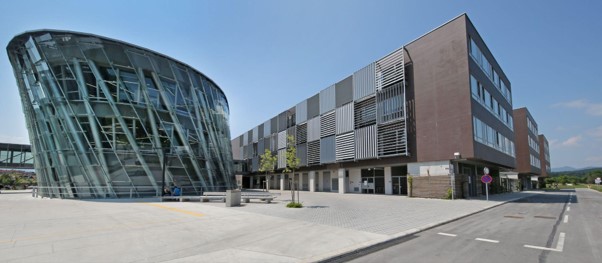
Europe currently imports over 90% of its refined rare earth elements (REEs), which are crucial ingredients for modern technologies like smartphones, computers, electric vehicles and wind turbines. The EU-funded REMHub project addresses this dependency on imports (mainly from China) by building domestic capacity for primary production and end-of-life recycling. The University of Ljubljana, founded in 1919, has a long record in the chemical sciences, and the Faculty of Chemistry and Chemical Technology (FKKT) operates as a key scientific partner among the 24 consortium members, advising on innovative green chemical processing and separation methods.
The chemical separation of REEs
Rare earth elements require precise chemical engineering for separation because they share nearly identical physical and chemical properties. With its long record in the chemical sciences, FKKT applies this expertise to modern challenges in rare earth extraction. Prof. Marjan Jereb leads the REMHub team at the faculty. His expertise in green organic chemistry directs the group’s methodology for the REE recycling processes being piloted by REMHub partners.
Designing targeted trapping systems
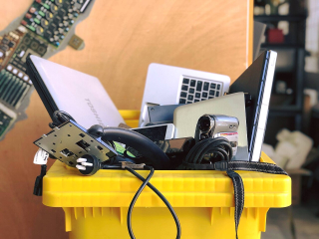
Rare earths in electronic waste or in mined ores exist as complex mixtures. Separating a specific metal, such as the rare earth neodymium, from dense rock or old electronic devices often requires adsorption of valuable ions from solution. This technique relies on a solid substrate capable of trapping selected ions from a solution containing a mixture of different metals. The FKKT team researches the precise chemical formulations required to enable efficient, selective transfer of REEs. They design targeted molecules that bind only to specific rare earth elements.
The FKKT team has developed a strategy for separating specific rare-earth elements (REEs) from complex mixtures using specialised ligands with pH-dependent selectivity. Much like different species of crabs preferentially grasp objects of particular shapes and sizes with their pincers, these ligands selectively capture individual metal ions under defined solution conditions, enabling efficient separation.
Replacing hazardous reagents with solvent-free approaches
Conventional hydrometallurgy relies heavily on harsh acids, bases and toxic chemicals. FKKT focuses on replacing these traditional substances with alternative, less hazardous ‘green’ leachates. The team aims to achieve the required chemical processing and separation using fewer toxic reagents than conventional mining practices, including exploration of completely solvent-free mechanochemical processing. The latter is intrinsically more sustainable than hydrometallurgical processes, as it generates less waste and enables chemical processes to proceed under more material- and energy-efficient conditions, which in turn affects the overall process cost. The chemical data generated at the faculty informs the broader engineering efforts of the consortium. Engineers take FKKT’s laboratory-scale solvent formulations and scale them up to handle large quantities of industrial side streams and discarded electronics.
Building a resilient supply network
The chemical methodologies refined by FKKT integrate directly into REMHub’s digital innovation platform. This platform provides stakeholders with actionable data on rare earth processing and recycling techniques, including green chemical processing and extraction. Localising these complex chemical processes helps the European supply chain support the production of permanent magnets for wind turbines and electric mobility infrastructure, powering the EU’s green transition.
In short, FKKT establishes cleaner separation protocols to provide REMHub partners with the technical data needed to convert regional industrial waste streams into viable domestic mineral reserves, thereby supporting a greener, more technologically advanced and independent Europe.
Join the REMHub community
The transition to a circular, resilient raw-materials economy is underway now. Don’t miss an update on the technologies shaping our future.
- Subscribe to our newsletter
- Visit remhub-project.eu
- Follow us on LinkedIn