Europe has the capability to design wind turbines, build electric vehicles and assemble sophisticated missile guidance systems. However, it does not mine the elements that make any of it work (at least for the most part). According to the European Commission, around 98% of the rare-earth permanent magnets used by EU industry are sourced from China. The continent has no shortage of engineers, factories, or policy. What it lacks is the first link in its own supply chain.
That is now beginning to change. Although there is no single European answer to Chinese dominance, or a flagship mine that resolves the dependency in one stroke, a value chain is emerging, stitched together in fragments. Sweden and Norway are working on extraction. Estonia handles separation and magnet production. Finland is the testbed for new exploration and processing technologies. Italy supplies the engineering to scale it. The REMHub consortium is supporting work at several of these sites to integrate the fragments into a coherent whole. In this post, you’ll learn more about where the work is happening and what each location is for.
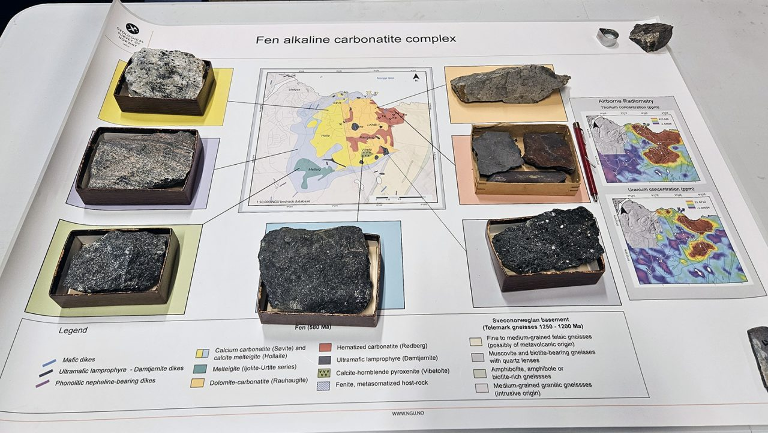
Let’s begin in Telemark, in southern Norway. The Fen Complex is a carbonatite deposit containing around 15.9 million tonnes of rare-earth oxides, the largest confirmed find in continental Europe. Norway sits outside the EU but is closely tied to its raw materials strategy, and Fen is the most consequential deposit yet identified in the region.
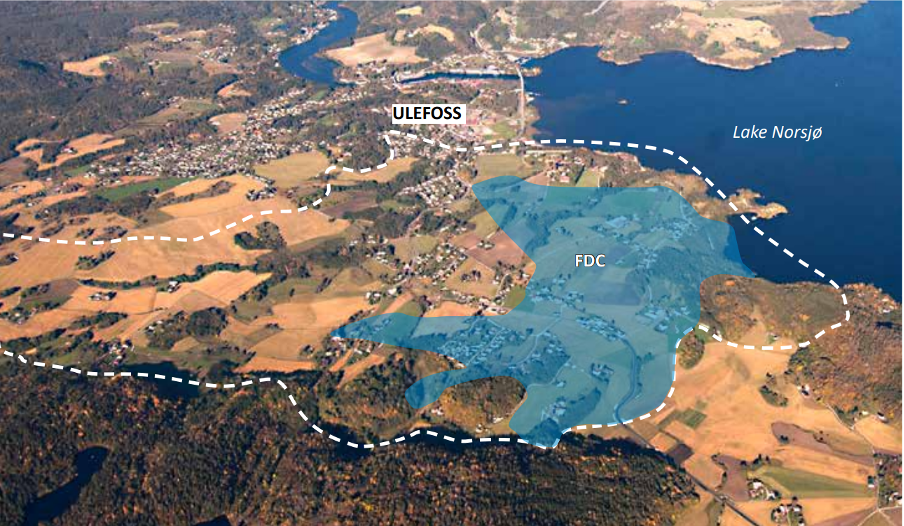
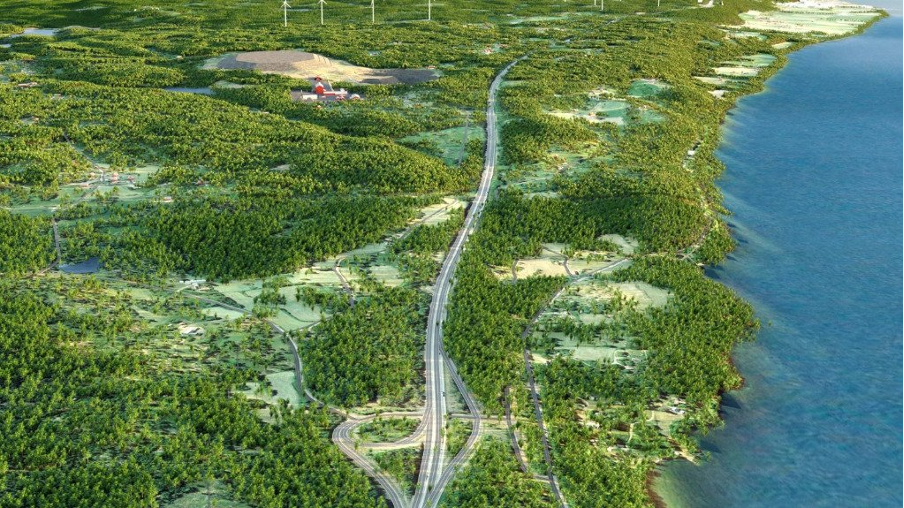
It also sits directly beneath a town of around 2,000 people. The developers have therefore proposed something they describe as the world’s first invisible mine. Ore would be crushed underground and moved through a long tunnel to a processing site away from the surface. The cavities left behind would be backfilled with rock and concrete. Once mining concluded, the town above would be unchanged.
This case is worth pausing on because it captures the constraint Europe is operating under: the geology is here, but the political acceptance is not, or not without engineering of this kind.
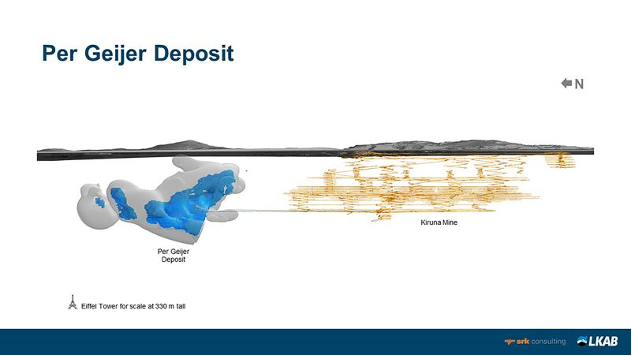
Now let’s move east. The Per Geijer deposit near Kiruna contains an estimated 2.2 million tonnes of rare-earth oxides, locked in apatite within an existing iron ore body. The state-owned miner LKAB has applied for an exploitation concession to drill at depth. Per Geijer would not be a standalone mine. It would be a rare-earth stream pulled from operations that Sweden already runs.
Further south, the Norra Kärr project targets the heavy rare earths that matter most for high-temperature magnets. Resource estimates suggest an annual output of around 248 tonnes of dysprosium and 36 tonnes of terbium oxides over a mine life of about 26 years. The project is awaiting final government decisions on its mining lease.
The pattern is consistent with what’s happening in other parts of Europe. Where the geology is favourable, the bottleneck is no longer technical. It is administrative.
Extraction is only the beginning. Once an ore is out of the ground, it must be cracked, dissolved and chemically separated into its constituent elements before any factory can use it. This is the chokepoint that China has held for decades, and Estonia is the European answer to it.
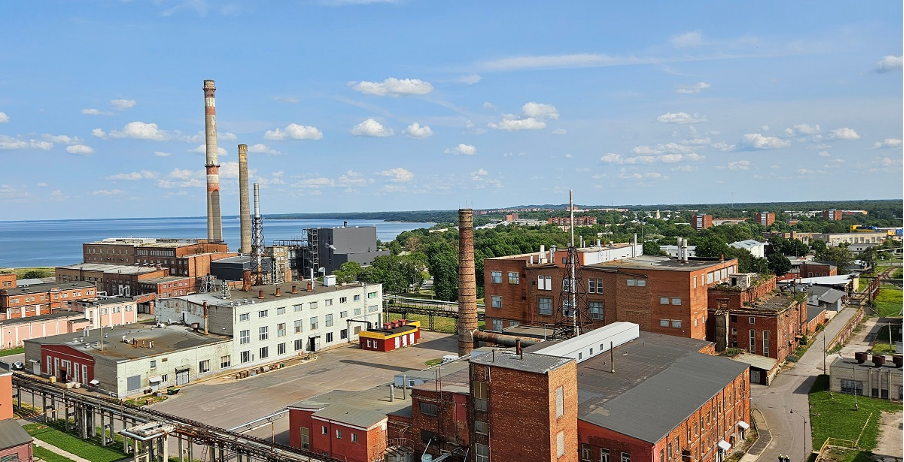
The Silmet plant in Sillamäe is the largest rare earth processor in Europe, separating concentrates into individual oxides for industrial buyers. Further east, Neo Performance Materials operates a permanent magnet manufacturing plant in Narva, working principally with neodymium-iron-boron and scaling toward a stated capacity of 2,000 tonnes by 2026. Between them, the two facilities cover the steps that turn ore into a finished component.
REMHub partners are also working upstream. The Rakvere phosphorite deposit in northern Estonia is the largest in Europe, and rare earths are present in the apatite at shallow depths. Researchers at Tallinn University of Technology are developing methods to recover those elements as a by-product of phosphorite processing, an approach that uses an industrial waste stream rather than opening a new pit.
A second Estonian partner, BiotaTec, works one step further downstream. Its bioleaching technology uses bacteria to dissolve rare earths from phosphogypsum, the byproduct of phosphoric acid production, and to recover scandium and vanadium from bauxite residue left over from aluminium refining. The method operates at low temperatures, avoids concentrated acids and treats material that has typically been stockpiled rather than processed.
Whether at Rakvere, Silmet or Narva, the logic is the same. Estonia is where Europe handles the chemistry.
Finland has suspected rare earth deposits, but its more distinctive contribution is the technology to find and process them. Several REMHub partners are concentrated here, each working on a different bottleneck.
A laboratory result is not a supply chain. Moving from a working method to industrial throughput requires automation, robotics and the unglamorous engineering of process integration. The Italian REMHub partner OSAI operates at this seam on the recycling side of the value chain. Its role is to develop automated dismantling and magnet-recovery systems for end-of-life electronics and electronic equipment, using machine vision and robotics to extract rare-earth magnets from waste streams such as hard drives, scooters and automotive power trains. The aim is a modular, scalable line that turns discarded products back into a source of supply, closing a loop that would otherwise leak value at every stage.
Set the country sections side by side, and the strategy’s shape becomes clearer. Europe is not betting on a single mega-project. It is closing the gaps in a value chain that already runs from northern Sweden to southern Italy, with REMHub providing the connective tissue. The work is incremental; timelines are measured in years rather than months, and the politics around each site remain difficult.
Set against the European Commission’s estimate that 98% of the EU’s permanent magnets currently arrive from China, this is not a small ambition. It is the difference between a continent that consumes rare earths and one that produces them.
REMHub is a Horizon Europe innovation project establishing a Digital Innovation Hub to boost EU excellence in REEs and magnets. By connecting partners across the entire value chain (from exploration and mining to magnet manufacturing and recycling), we are accelerating the technologies needed to power Europe’s green and digital transition.
Are you interested in rare earth elements, the REMHub initiative, or potential collaboration opportunities? We invite you to share your contact details through the REMHub Interest Form.
The form helps us understand stakeholder interest and intent – whether you are a potential partner, service user, or simply interested in following the initiative. This supports REMHub’s goal of engaging stakeholders across the rare earth element value chain and connecting them through an innovation hub.